Inside the workshops of Agra’s most familiar sweet
To most visitors, petha appears neatly packed behind a sweet-shop counter. Its journey begins elsewhere—in workshops filled with ash gourds, specialised tools, heavy vessels, old machinery and skilled hands.
This photo essay follows that transformation while looking at petha not only as food, but also as labour, livelihood and part of Agra’s cultural landscape.
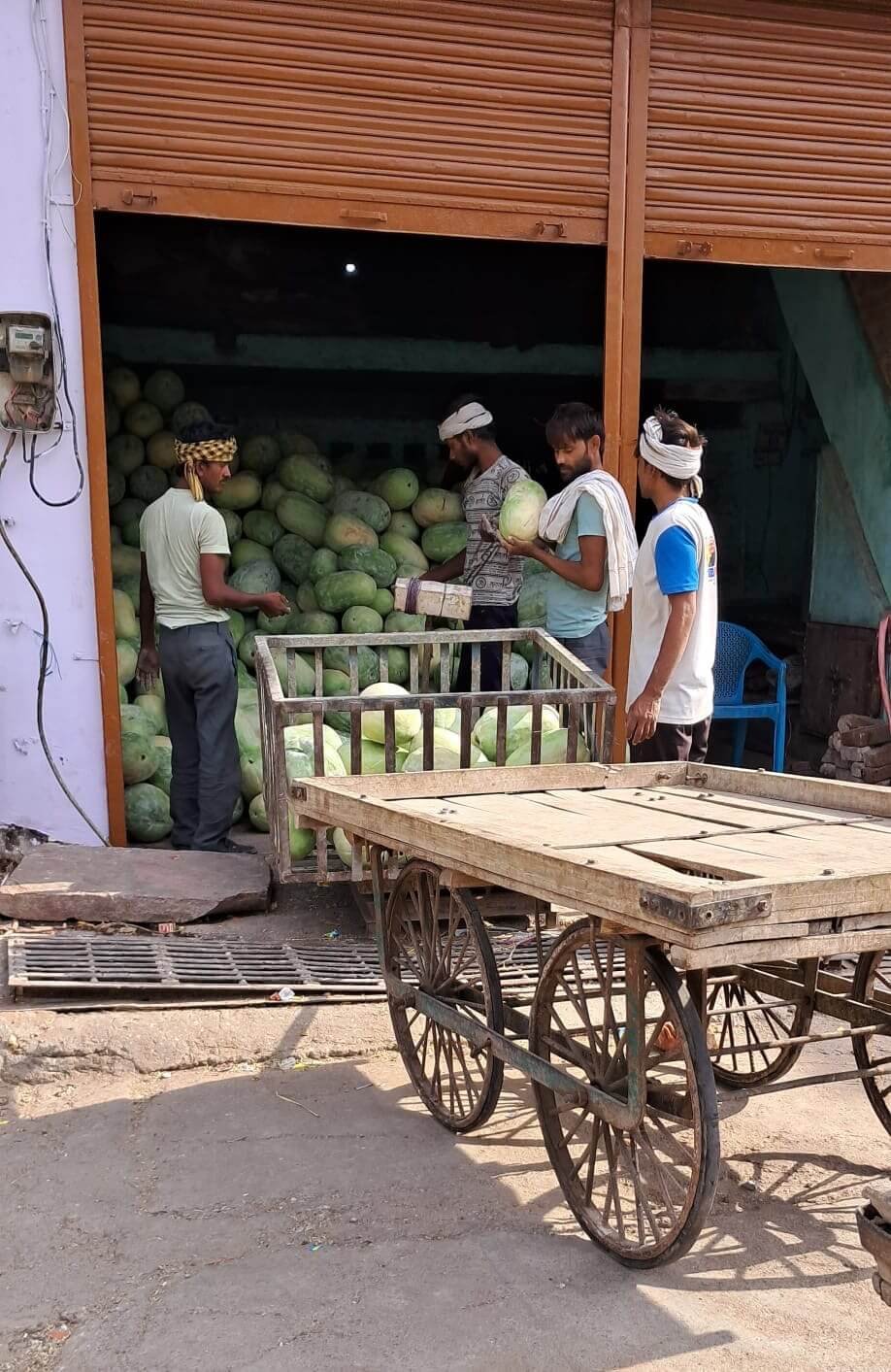
The Journey Begins
Petha begins with the arrival of ash gourds. Loaded and moved by hand, the fruits connect the workshop to agricultural producers, traders and transport networks extending beyond the city.
Even before production begins, the sweet is already part of a wider geography of farms, markets, roads and labour.
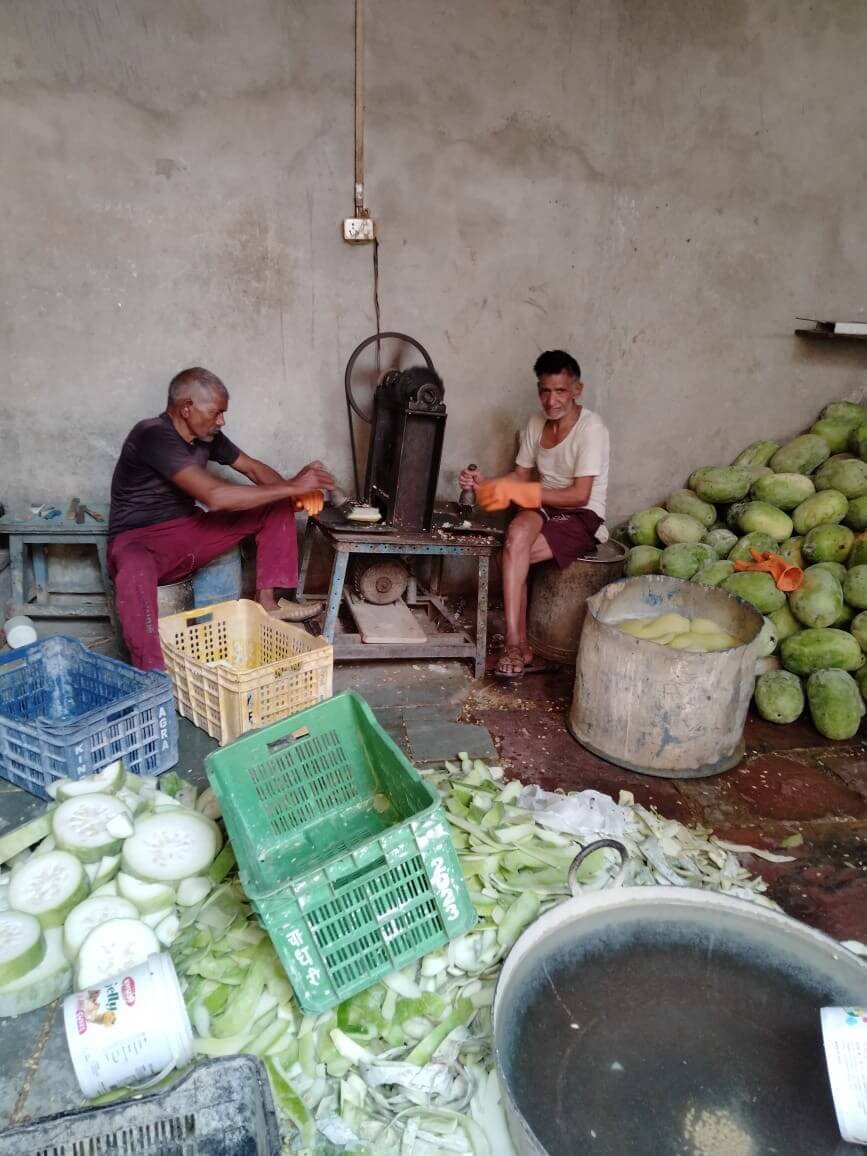
Inside the Workshop
The production space brings raw fruit, machinery, vessels, baskets and workers together within a compact environment. Each part of the workshop supports a particular stage of the process.
This is not simply a factory floor. It is a working landscape shaped by routine, experience and adaptation.
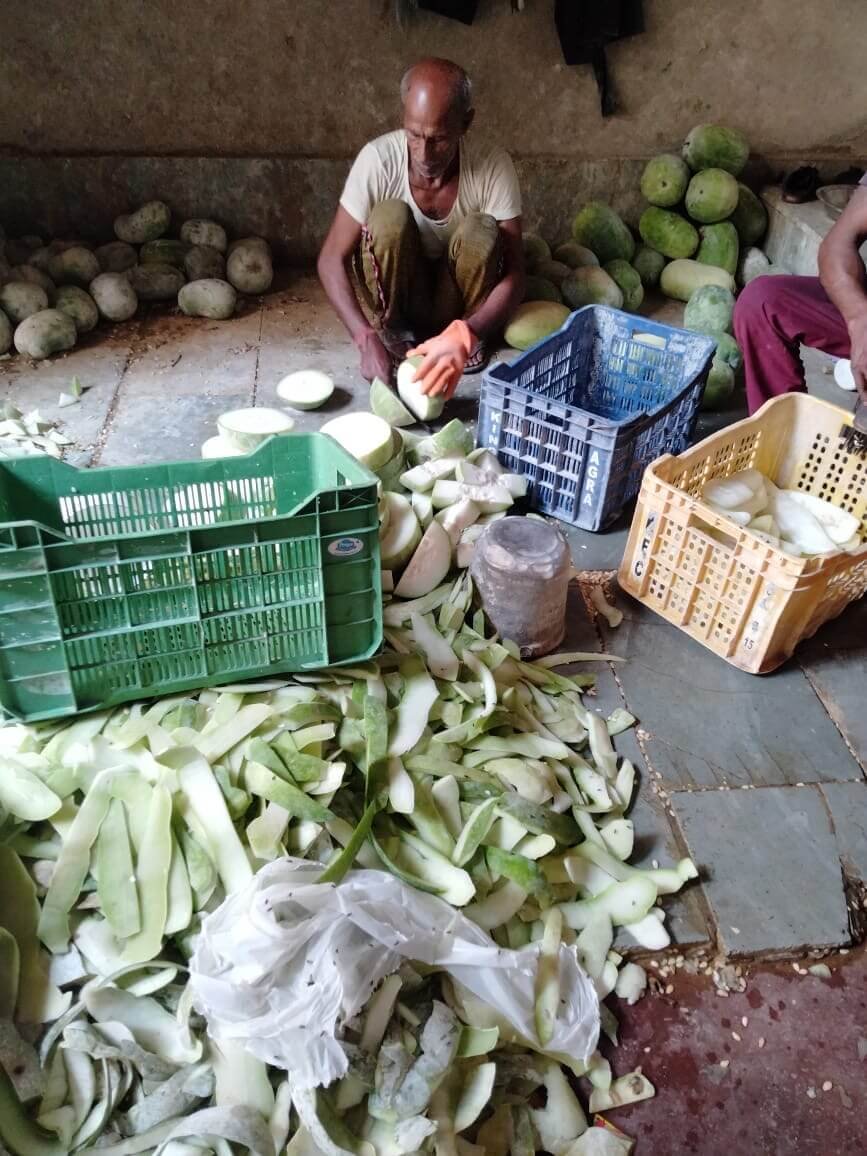
Peeling the Ash Gourd
The thick outer skin is removed and the fruit is opened. This exposes the firm white flesh from which petha will be made, while peel and softer portions accumulate around the workspace.
The transformation begins with repetitive manual work carried out one fruit at a time.
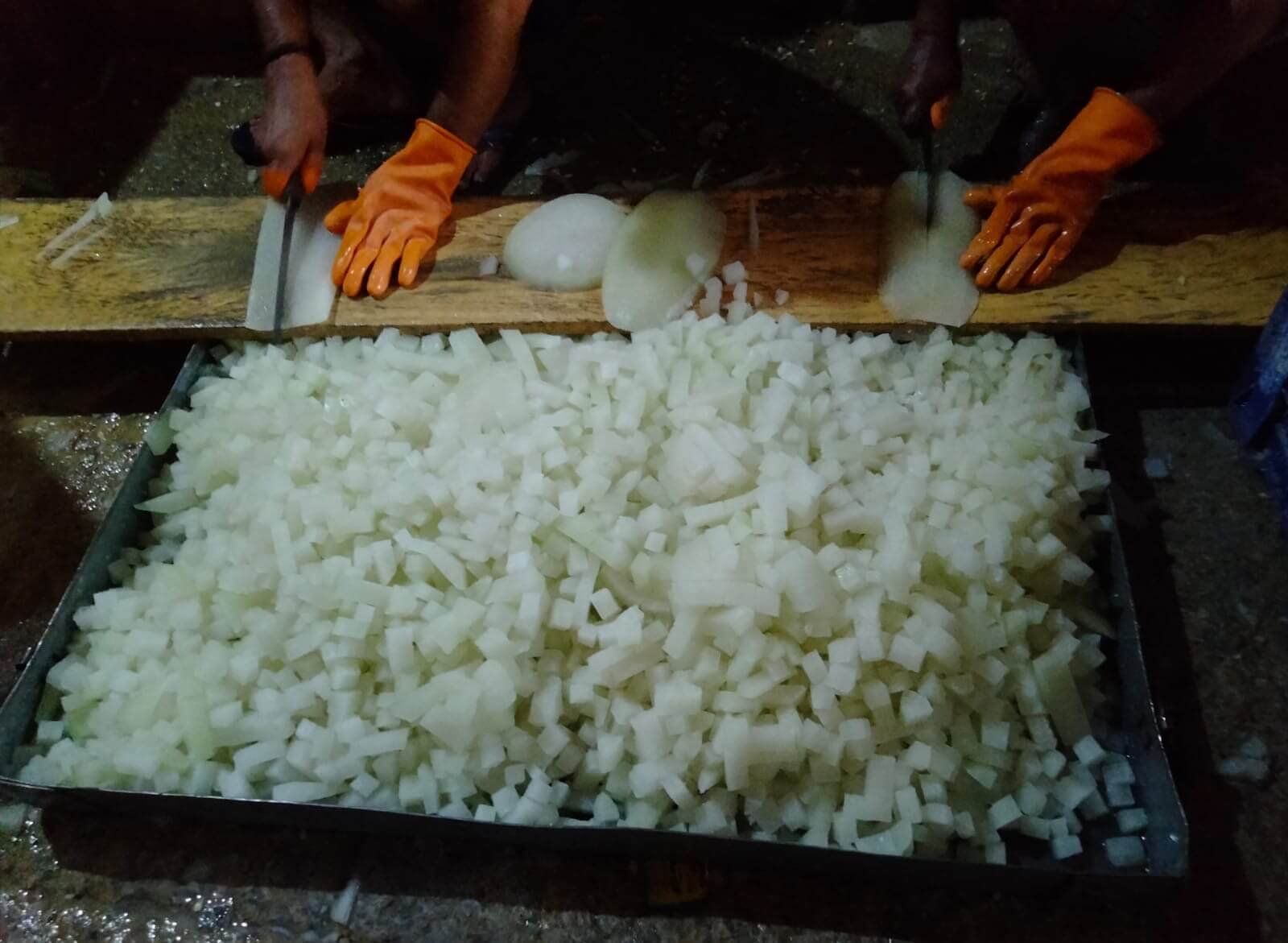
Cutting and Shaping
The cleaned gourd is divided into smaller pieces. What began as a large fruit gradually takes on the familiar dimensions of the sweet sold across Agra.
Uniform cutting helps the pieces pass more evenly through the stages that follow.
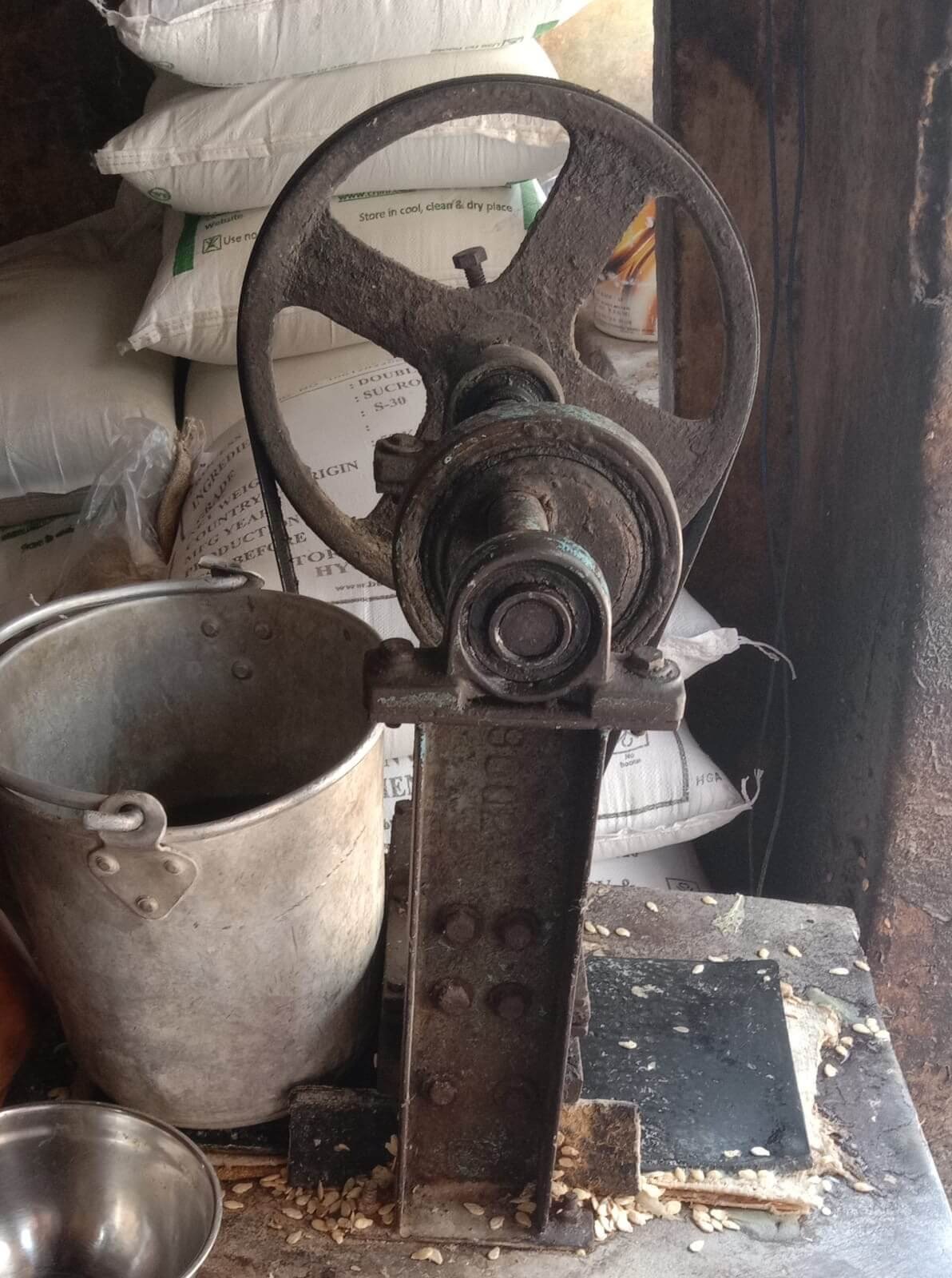
Machines with a Long Working Life
Hand labour is supported by simple mechanical equipment. Heavy wheels, belts and metal frames reflect a production system designed around durability rather than modern appearance.
The machinery is part of the workshop’s material history—maintained, repaired and reused over time.
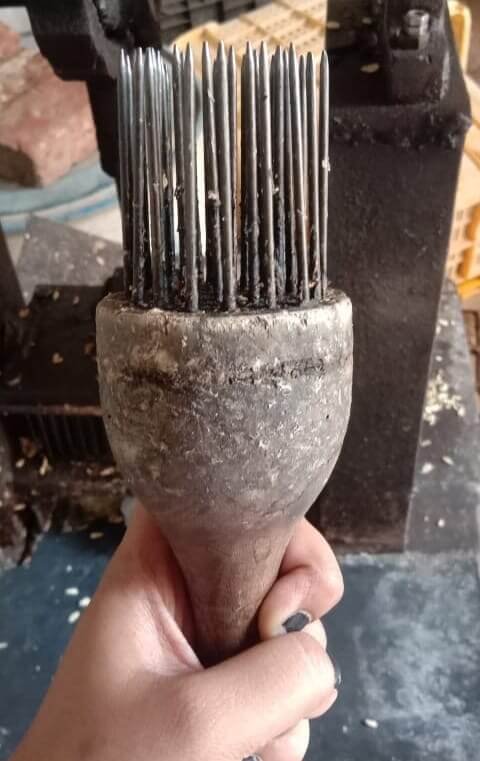
The Piercing Tool
One of the workshop’s most unusual objects is a heavy hand-held tool fitted with rows of closely arranged metal spikes. It is used to puncture the prepared pieces before subsequent processing.
A familiar sweet begins with a tool that few customers will ever see.
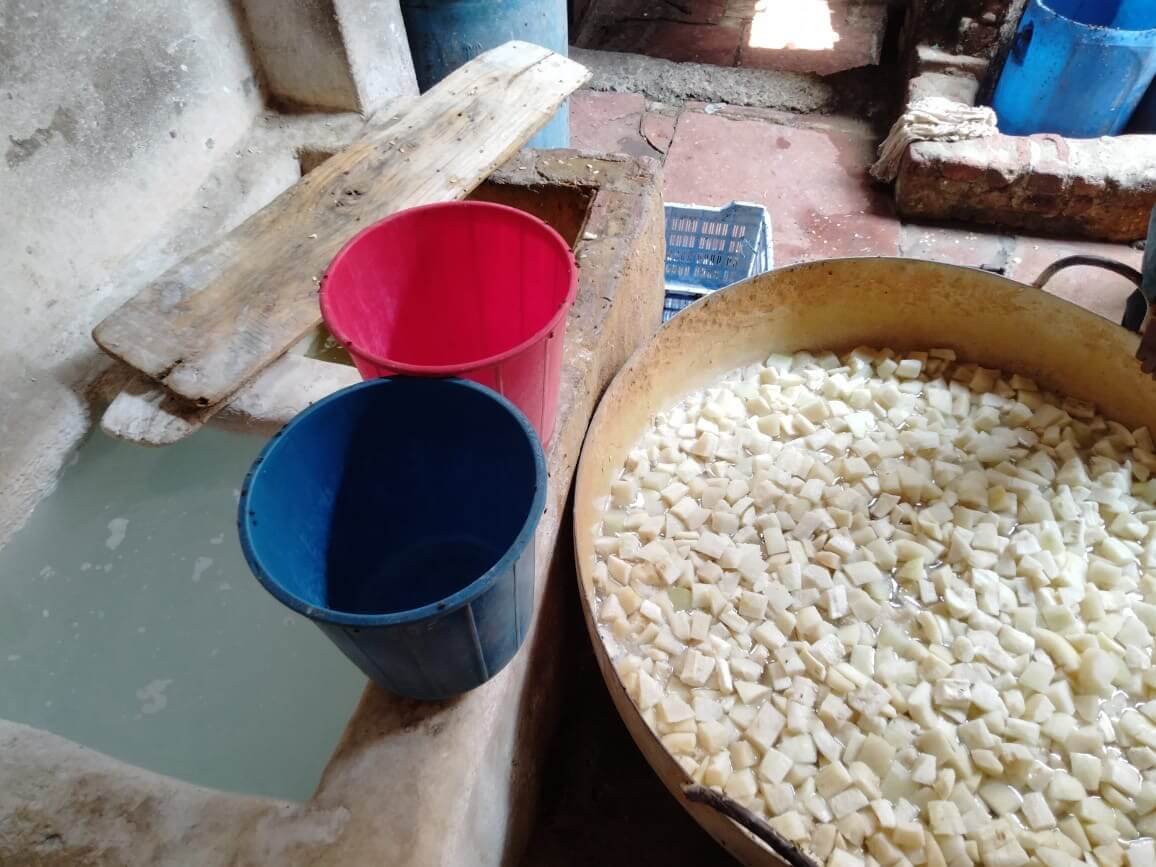
Washing and Soaking
The cut pieces pass through stages involving water, washing and soaking. Large vessels and buckets dominate this part of the workshop, making production a wet and physically demanding process.
Water is central to production, but it also raises questions about drainage, cleanliness and resource use.
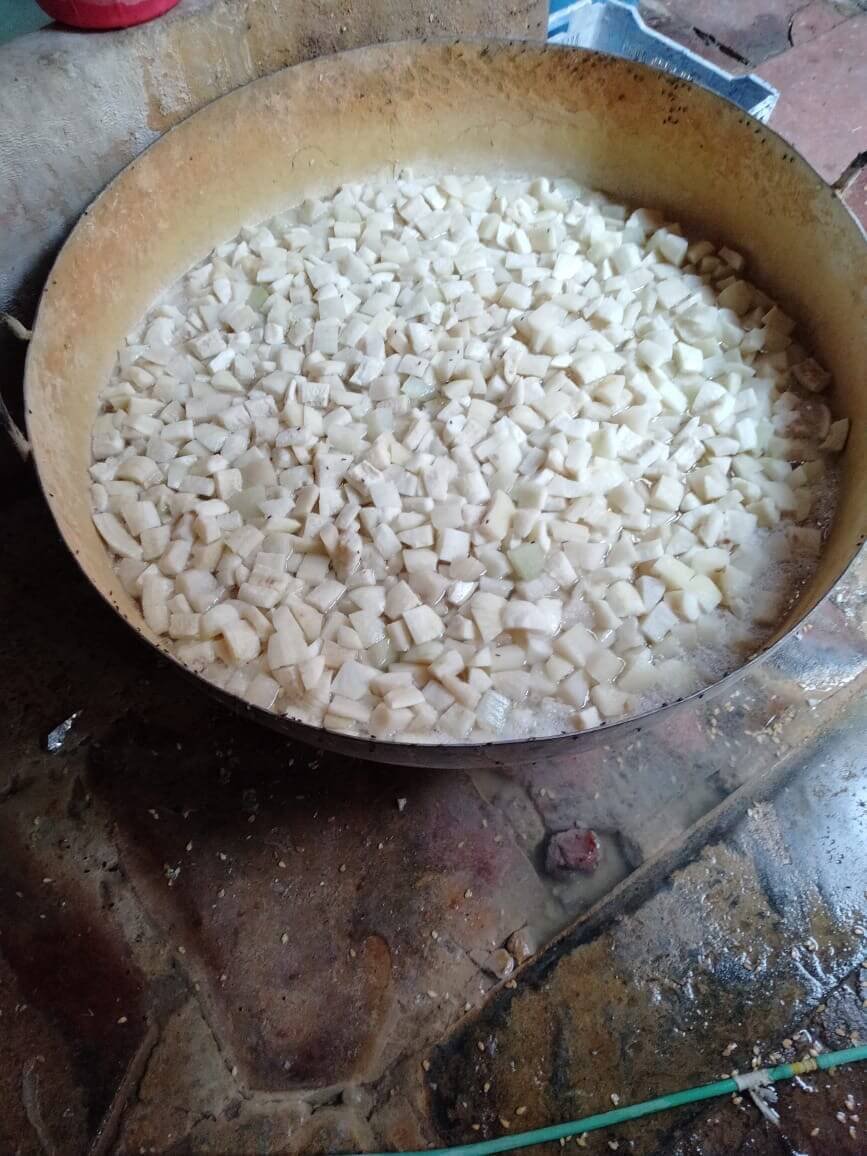
Into the Vessel
The prepared pieces are gathered in large metal vessels for further treatment and heating. At this stage, the raw gourd begins to lose its original appearance and move closer to the texture of petha.
Production takes place in batches, each involving substantial quantities of fruit, water and heat.
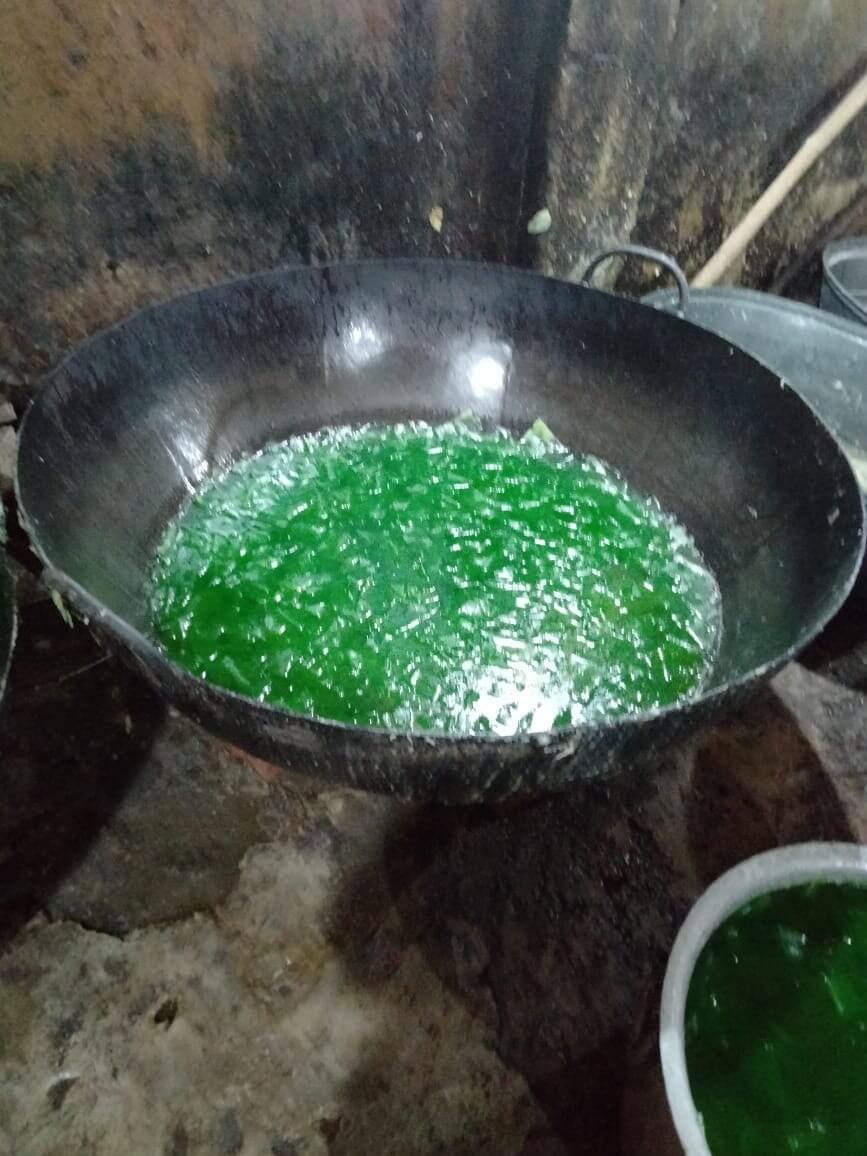
Colour and Flavour
Petha is no longer limited to its classic translucent form. Coloured and flavoured varieties reveal how a traditional product changes in response to new tastes and expanding markets.
Tradition survives not by remaining unchanged, but by continually adapting to consumers.
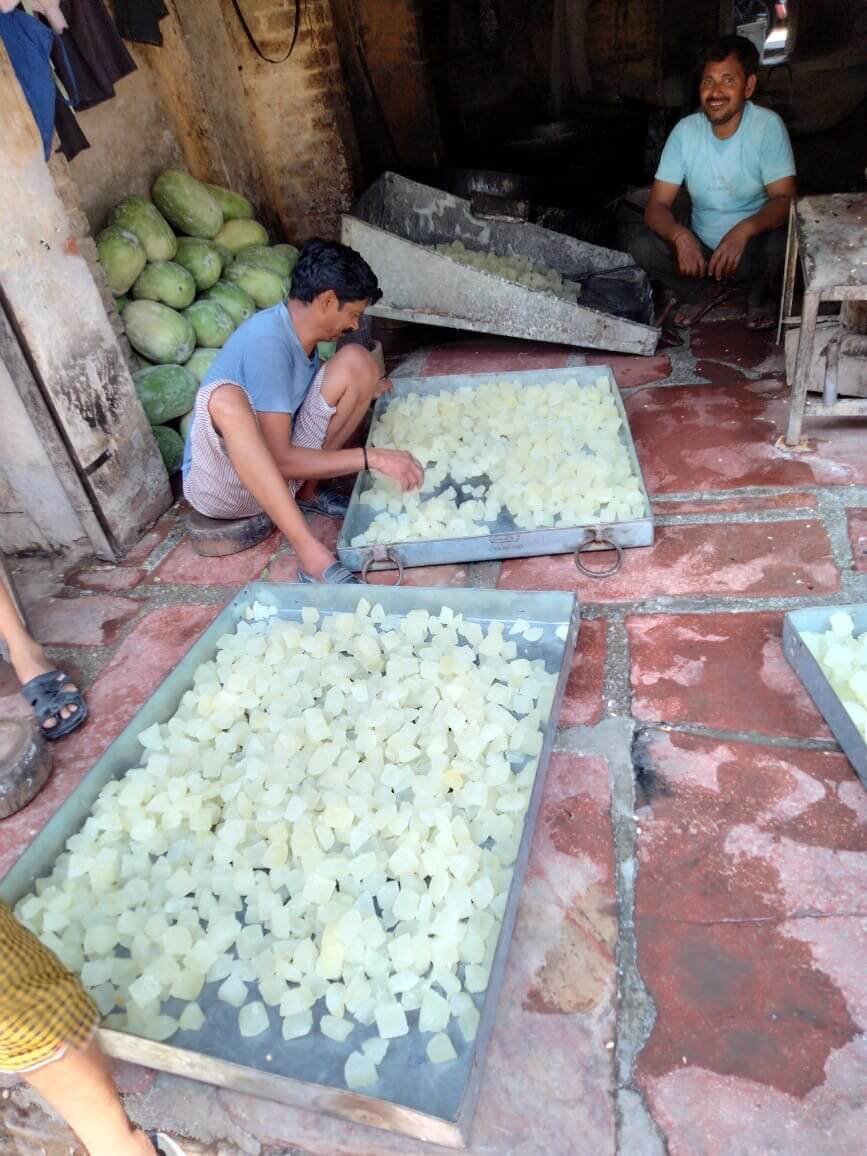
Spread, Sorted and Checked
The processed pieces are spread across large metal trays. Workers separate and inspect them before they move towards the market.
The production line unfolds across hands, baskets, vessels and open trays rather than within a completely automated system.
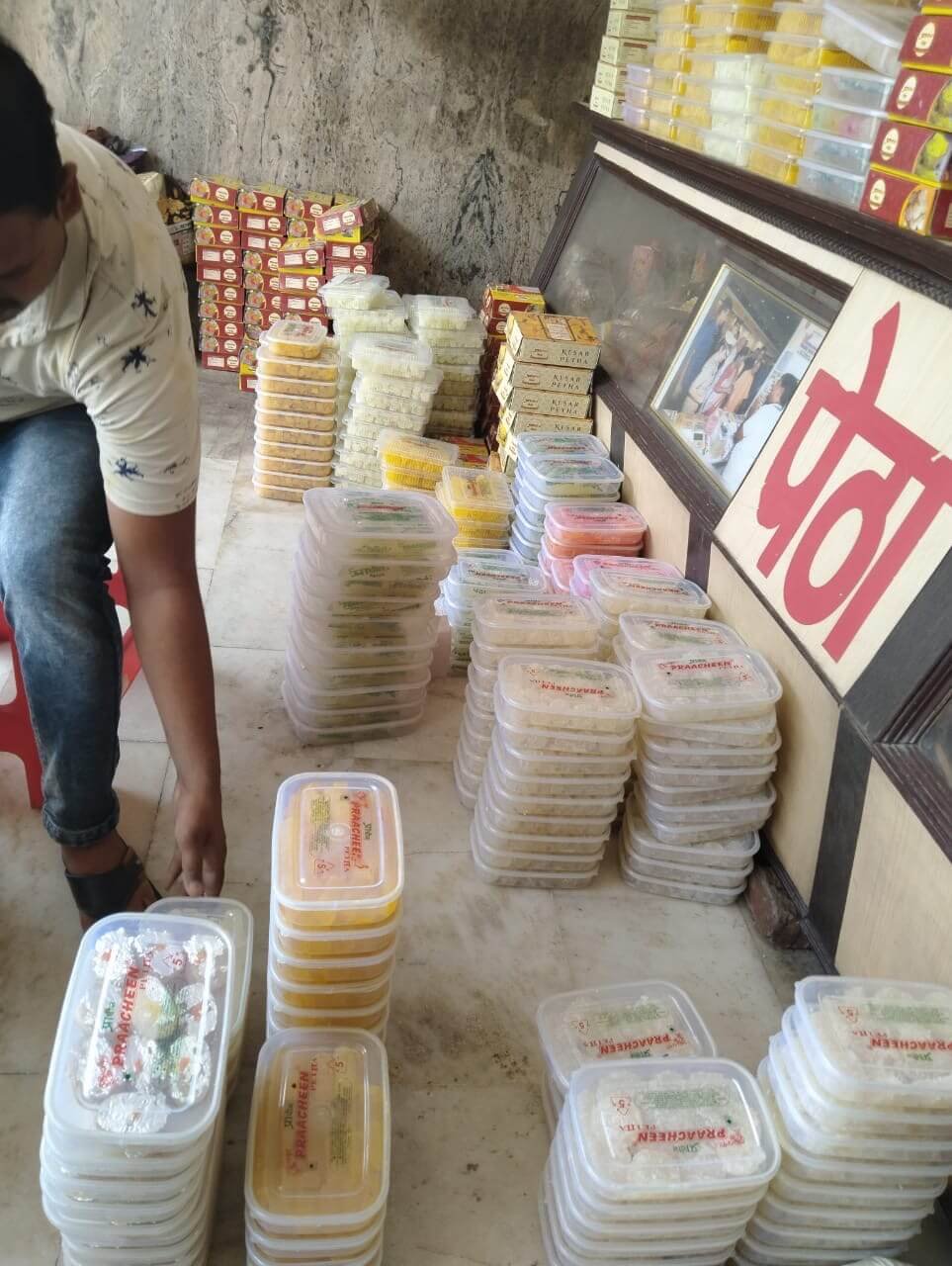
From Workshop to Market
The finished product enters a very different visual world. The workshop’s gourds, peel, machinery and vessels disappear behind sealed boxes, labels and displays intended for residents and visitors.
Packaging transforms workshop labour into a recognisable product associated with Agra.
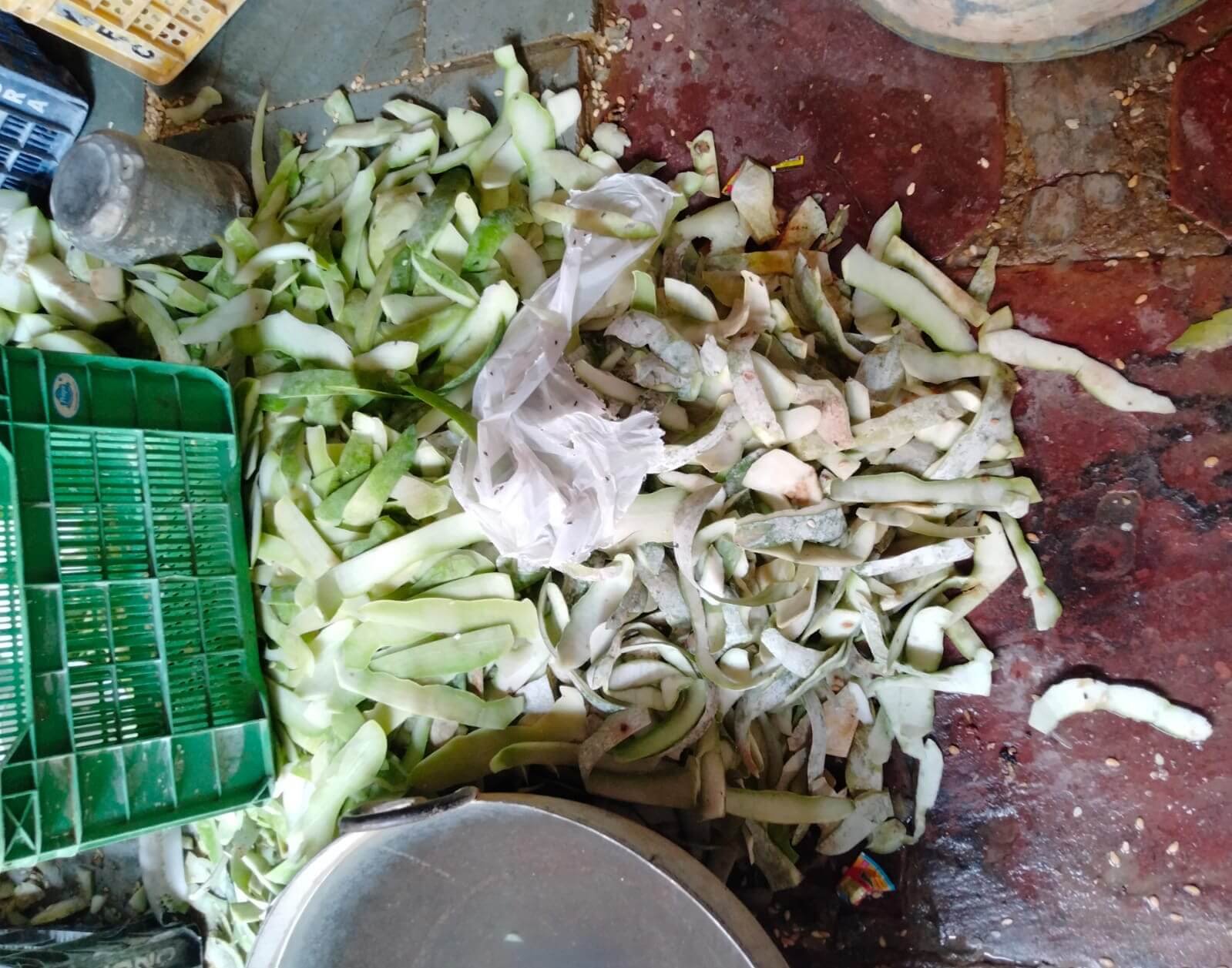
The Other Side of a Famous Sweet
Petha production also generates large quantities of peel, seeds and other organic residue. The workshop therefore reveals not only a celebrated local industry, but also the environmental questions that accompany it.
Waste collection, water use, drainage and working conditions form part of the wider geography of production—even though they remain invisible in the packaged product.
What reaches the market is only one part of the story.
How Does a Sweet Become Part of a City?
Petha is often presented as an edible symbol of Agra. It appears in tourist shops, railway stations, gift boxes and conversations about the city.
Yet its identity is created through a much wider system: agricultural supplies, transport networks, workshops, workers, traders, shops and consumers. A product associated with one place may depend on many other places and people.
Seen geographically, petha is therefore more than a local delicacy. It is part of Agra’s economy, cultural identity and everyday working life.
and from labour to local identity.

Discover more from The Meridian Society
Subscribe to get the latest posts sent to your email.