MappingHistory
Tracing the people, places, institutions and ideas that have shaped St. John’s College and its place within the history of Agra.
History as a network, not simply a line.
The story of St. John’s extends beyond the boundaries of its campus. Its teachers became institution-builders; its buildings record changing ideas of education; and its history intersects with the emergence of Agra as a university city.
Mapping History follows these connections chronologically while allowing significant people, places and institutions to branch away from the main timeline.
Entries are grounded in institutional histories and archival sources. Where historical accounts differ, the distinction is retained and documented.
The institutional background
The Agra C.M.S. Association is established, forming part of the organisational background from which St. John’s College would emerge.
St. John’s begins
The college identifies 1850 as its foundation year under the Church Missionary Society. Thomas Valpy French is the figure most closely associated with its beginnings.
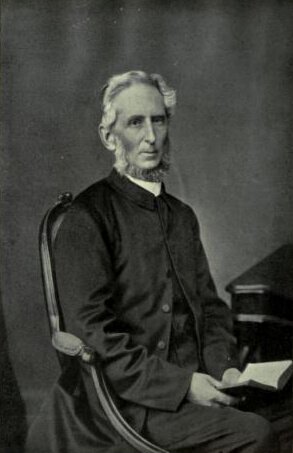
Thomas Valpy French
French’s association with the beginnings of St. John’s opens a larger story connecting Agra with nineteenth-century missionary education and his later ecclesiastical career.
A permanent academic space
Teaching moves to a purpose-built structure described in the college prospectus as designed by Major Kittoe, containing a hall and eight classrooms.
Affiliation with the University of Calcutta
St. John’s becomes affiliated with the University of Calcutta, beginning a formal university affiliation that continues until 1888.
St. John’s → University of Calcutta
The affiliation connects the college’s developing degree-level teaching in Agra to the university examination system.
The first graduate
Damodar Das is recorded as the college’s first graduate.
Affiliation with the University of Allahabad
After its 1862–1888 affiliation with the University of Calcutta, St. John’s becomes affiliated with the University of Allahabad.
Calcutta → Allahabad
The college’s university affiliation shifts from Calcutta to Allahabad, where it remains until the formation of Agra University in 1927.
A First Grade College
B.A. and LL.B. classes are introduced during a period of significant academic expansion.
Access and social change
The college’s institutional history records the admission of its first Scheduled Caste student, an episode that warrants continued study within the social history of education in Agra.
New forms of instruction
The college pursued postgraduate affiliation and introduced Telegraphy and Signalling classes, reflecting the changing educational and employment landscape of the period.
Arthur Whitcliffe Davies becomes Principal
Rev. Dr. Arthur Whitcliffe Davies begins a principalship that would overlap with one of the most consequential periods in Agra’s educational history.
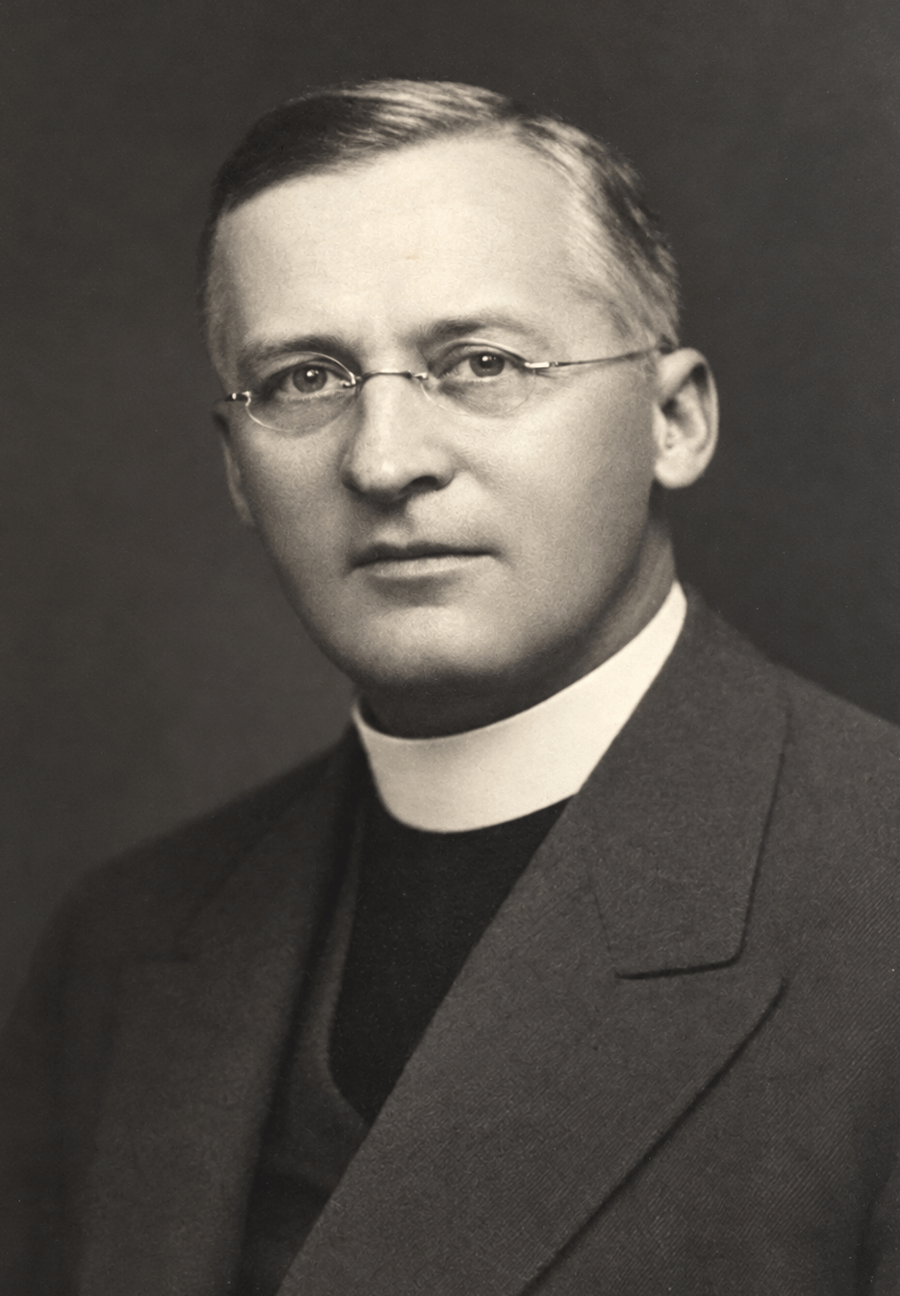
Arthur Whitcliffe Davies
Davies links the institutional history of St. John’s directly to the foundation of Agra University.
Agra University is established
St. John’s becomes affiliated with the newly established Agra University.
Allahabad → Agra
St. John’s transfers its affiliation to the newly formed Agra University. The serving Principal, Arthur Whitcliffe Davies, becomes the new university’s first Vice-Chancellor.
The Centenary Wing
Dr. Sarvepalli Radhakrishnan lays the foundation stone of the Centenary Wing.
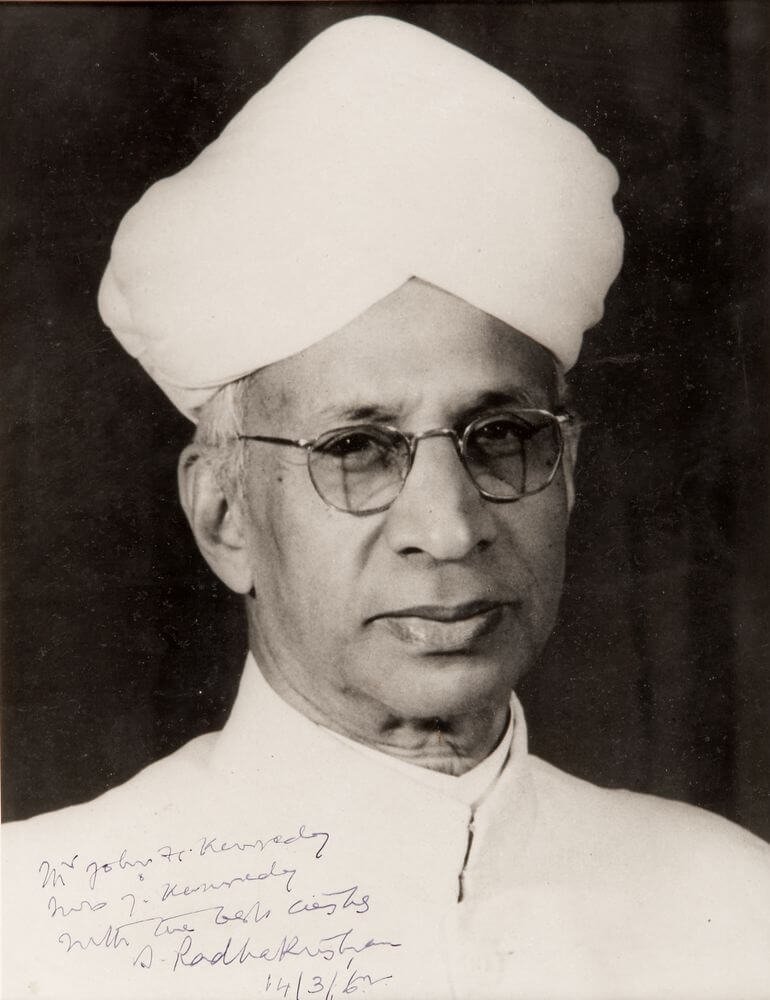
Sarvepalli Radhakrishnan
The ceremony places a major phase of campus development within the intellectual and political landscape of post-Independence India.
Nehru opens the Centenary Wing
Prime Minister Jawaharlal Nehru formally opens the new wing.
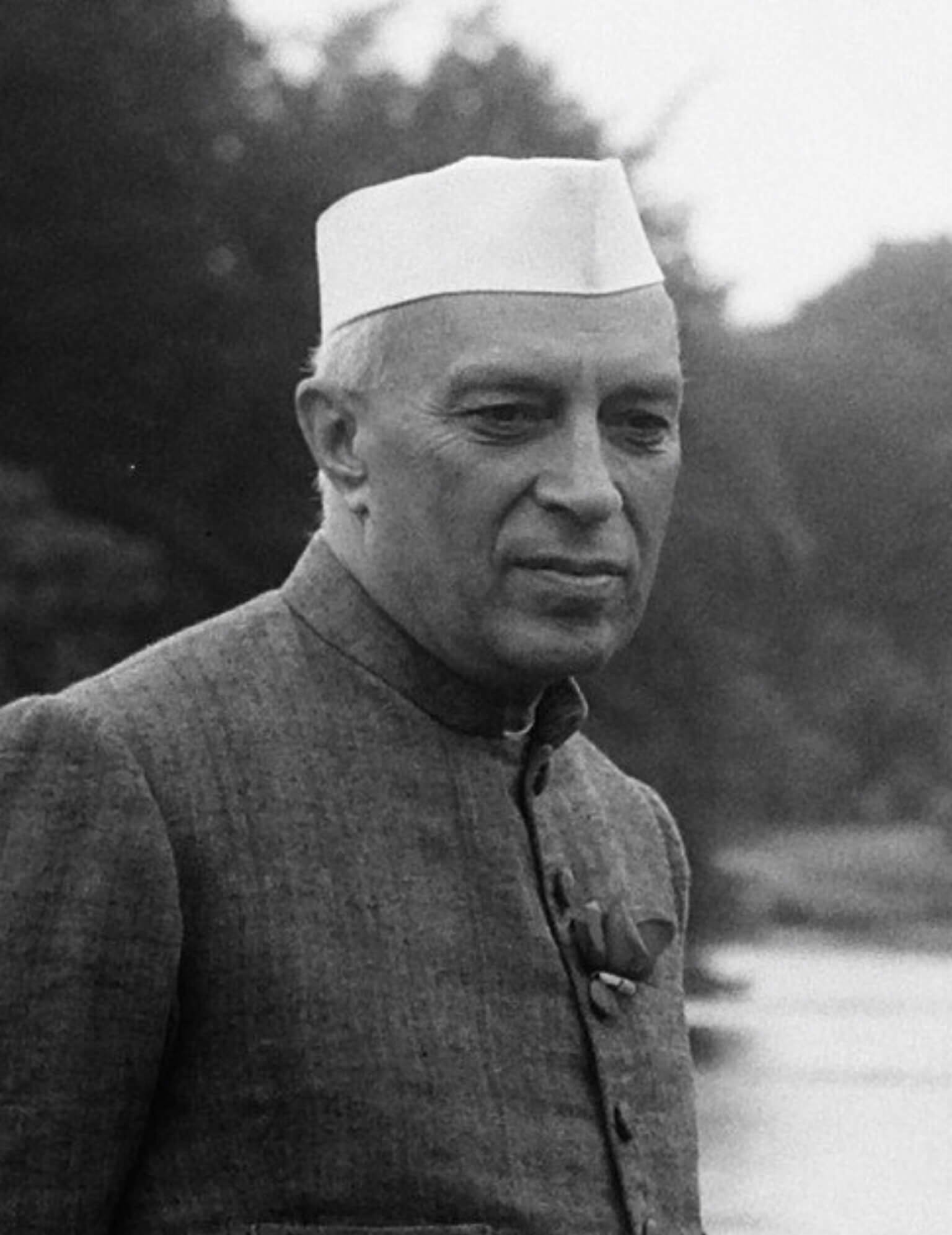
Jawaharlal Nehru
The opening becomes one of the college’s prominent post-Independence historical moments.
A history still connected to the city
St. John’s remains part of Agra’s academic landscape more than a century and a half after its nineteenth-century beginnings. Mapping History brings buildings, biographies, documents and institutional memory into a connected public history.
From Principal to first Vice-Chancellor
Branching allows one life to be read across institutions. Davies’s trajectory is not a detached biography: it is a structural connection between St. John’s College and the foundation of Agra University.
People, buildings & documents
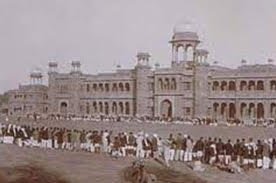
Historical photographs are treated as evidence: attached to the event, person or place they illuminate and accompanied by dates, captions and provenance.
Sources & notes
A public history should show its workings.
- St. John’s College, Agra — institutional profile, prospectuses and departmental histories.
- St. John’s College, Agra, 1850–1930 (1932), with a preface by A. W. Davies.
- Church Missionary Society publications and archival records.
- University calendars and records relating to Agra University.
- Government education reports, Gazette notices, newspapers, maps, photographs and private collections.
Editorial principle: claims are cross-checked where possible. Conflicting dates or interpretations are identified in the relevant entry rather than silently harmonised.